Review: Funny Highland Cow Boy Embroidery Design
As a designer who has spent countless hours hooped up at the machine, I have learned that not every cute graphic translates well into thread. We see thousands of digital files claiming to be "ready to stitch," but the reality of machine embroidery design is far more nuanced. Recently, I downloaded the Funny Highland Cow Boy Embroidery file to test its viability for a client’s upcoming spring collection. What follows is my honest assessment of how this design performs in real-world scenarios, from stitch quality to commercial appeal.
First Impressions and Visual Personality
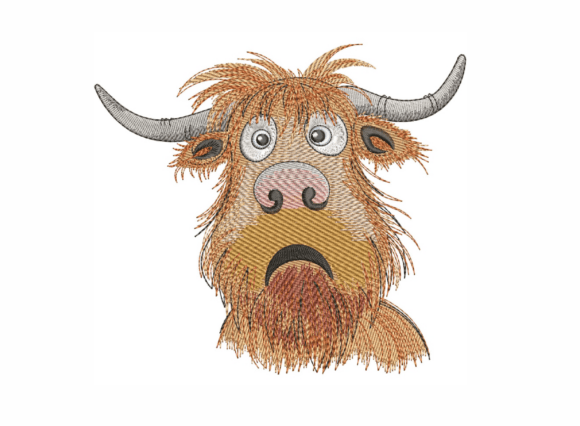
The moment I loaded the preview, the charm was undeniable. This isn’t just another generic cow silhouette; it captures a specific, quirky personality that resonates with current trends in rustic and farmhouse decor. The layout balances humor with clarity, ensuring the character remains recognizable even at smaller scales. For those of us in the Farm Animals niche, finding a design that avoids looking cartoonish or overly simplistic is a challenge. This design manages to walk that line effectively.
The visual mood is lighthearted yet polished. It feels appropriate for a wide range of applications, from playful children’s items to whimsical home goods. When evaluating any embroidery file, I look for clean lines and logical color breaks. This design appears to use a smart combination of satin stitch for outlines and finer details, paired with fill stitch areas that provide texture without excessive bulk. This balance is crucial for maintaining the integrity of the fabric, especially on softer materials like cotton blends or fleece.
Real-World Application: The Tote Bag Test
To truly judge a design, you must stitch it out. I chose to test the Funny Highland Cow Boy Embroidery on a heavy-duty canvas tote bag, a popular item for my small shop customers. Canvas can be tricky; it has a distinct weave that can interfere with tiny details if the stitch density is too low or the needle size is incorrect.
I used a medium-weight cut-away stabilizer to prevent puckering, which is essential for any project involving fill stitches on woven fabrics. The result was impressive. The cow’s features remained crisp, and the humorous elements were clearly visible from a distance. This confirmed that the design works well as a tote bag design for grocery runs, library bags, or market totes. It adds value to a plain item, turning a basic utility product into a handmade product with personality.
I also considered how this would look on apparel. For sweatshirt embroidery, the design’s scale needs to be carefully managed. On a adult-sized hoodie, it serves as a great chest pocket accent or a larger back piece. However, on thinner fabrics like a standard t-shirt, I would recommend using a tear-away stabilizer and possibly backing the area with interfacing to prevent the stitches from pulling the fabric. The design’s versatility makes it a strong candidate for custom apparel lines, provided you adjust your stabilization strategy based on the garment weight.
Navigating Technical Challenges
While the design is robust, there are areas where caution is necessary. Any experienced Etsy seller knows that customer expectations vary wildly. If you plan to use this on an embroidered patch, ensure your hoop size accommodates the entire motif without cutting off critical details. Small hoop sizes can sometimes force designers to compress details, leading to thread breaks or lost definition.
Textured fabrics present another hurdle. If you are stitching this onto a waffle-knit towel or a fuzzy blanket, the thread colors must contrast sharply with the background. A dark thread on a dark fabric will vanish, regardless of how good the digitizing is. I always advise testing the design on scrap fabric first, ideally in both light and dark variations, to check for visibility. Additionally, curved surfaces like caps require careful hooping. The Funny Highland Cow Boy Embroidery has enough structural integrity to hold up on a cap front, but you must ensure the centering is perfect, as any distortion will be immediately noticeable.
Another consideration is washability. Items like baby embroidery pieces or kitchen towels undergo frequent laundering. Dense stitch areas can become stiff over time. While this design does not appear overly dense, it is wise to check the stitch count if provided by the creator. If the data is missing, assume a moderate density and test wash your sample to ensure the threads do not fray or the fabric does not pucker after multiple cycles.
Commercial Viability and Brand Consistency
For craft business owners, the appeal of a design goes beyond aesthetics; it must sell. The quirky nature of this Highland cow taps into the popular "cottagecore" and rustic aesthetics that dominate social media. Using this in your digital embroidery file shop or as a finished product can boost buyer engagement. It stands out in thumbnail images because of its distinct character.
However, professionalism is key. Before listing this as a small shop product, verify the licensing terms. Many designers offer different licenses for personal versus commercial use. Ensure you have the right to sell finished items or, if you are a digital seller, that you are not redistributing the file itself unless explicitly permitted. Misunderstanding license terms can lead to serious legal issues for creative entrepreneurs.
When creating printable mockup assets for your online store, show the design in context. Display it on a pillow cover, a tea towel, and a onesie. This helps customers visualize the finished product and increases conversion rates. The design’s adaptability allows it to fit seamlessly into holiday collections, such as holiday embroidery themes for Christmas or Easter, by simply changing the thread colors to match the season.
Final Designer Notes
In summary, the Funny Highland Cow Boy Embroidery is a solid addition to any designer’s library. It offers a blend of humor and technical reliability that is rare in free or low-cost files. To get the best results:
- Test on scrap fabric: Always run a test stitch-out to check tension and registration.
- Check thread contrast: Ensure your chosen thread colors pop against the fabric texture.
- Verify hoop size: Confirm the design fits your available hoops without resizing that distorts the aspect ratio.
- Use proper stabilizer: Match the stabilizer to the fabric weight to prevent puckering.
- Review licensing: Confirm whether the file allows for commercial sales of finished goods.
This design is not just a novelty; it is a versatile asset for commercial embroidery projects. Whether you are creating personalized gifts for friends or stocking your boutique with unique design assets, this Highland cow brings a smile and a sense of quality craftsmanship. By paying attention to the technical details and understanding your material constraints, you can turn this digital file into a high-value physical product that customers will love.