Teddy Bear Carrying Honey Embroidery Review
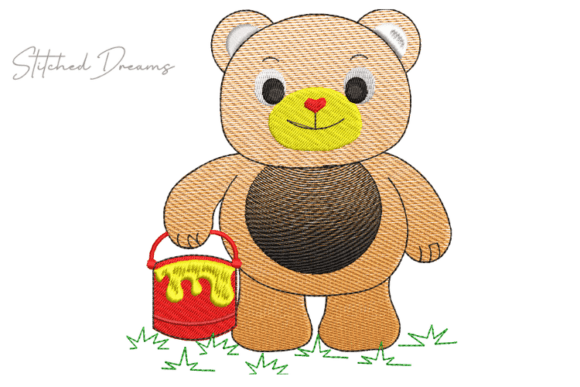
As an embroidery designer who has spent countless weekends standing behind craft fair booths, I have learned that not every cute design translates into a bestseller. When I first loaded the Teddy Bear Carrying Honey Embroidery file into my machine software, I was looking for more than just aesthetic appeal. I was evaluating its potential as a high-converting craft fair product. The premise is simple: a lovable teddy bear happily carrying a pot of honey. But in the competitive world of handmade goods, simplicity must be executed with precision to capture attention.
First Impressions and Market Appeal
The immediate vibe of this design is heartwarming and rustic. It does not scream modern minimalism, nor does it try to be overly elegant. Instead, it radiates joy and softness, fitting perfectly into the "cottagecore" or farmhouse aesthetic that continues to dominate the small shop product market. For an Etsy seller or boutique maker, this visual language is crucial. Customers at a weekend market are often scanning tables quickly. A design that feels friendly and nostalgic, like this Teddy Bear Carrying Honey Embroidery, stops the scroll and the walk-by.
The charm lies in the narrative. A bear with honey suggests comfort, sweetness, and home. This emotional connection is what turns a browser into a buyer. However, from a production standpoint, we must look beyond the emotion. Does the design hold up under scrutiny? Is it practical for batch production?
Best Products for Maximum Impact
Not every substrate is created equal. Through my experience testing various items, I have identified where this specific machine embroidery design shines brightest.
- Tote Bags: A canvas tote with this design centered makes for an excellent tote bag design. The sturdy fabric supports the stitch count well, and the size allows the details of the honey pot to remain visible.
- Aprons: For kitchen-focused buyers, apron embroidery featuring this bear adds a playful touch to a functional item. It works best on the bib area where it can be seen clearly.
- Tea Towels: This is a tricky category. While tea towel embroidery is popular, the texture of waffle weave or terry cloth can distort small details. This design works best on flat-weave linen towels where the stitch density can lay flat without sinking into the pile.
- Embroidered Patches: Creating an embroidered patch allows you to sell the design as an add-on. It is perfect for customers who want to customize their own jackets or bags later.
I would hesitate to use this on curved cap surfaces unless the design is significantly scaled down and simplified, as the curvature can distort the bear’s proportions. Similarly, avoid dark fabrics unless you are confident in your ability to manage thread contrast effectively.
Production Practicality and Quality Control
When preparing for a busy market season, repeatability is key. You need a digital embroidery file that runs smoothly without constant thread breaks or trimming issues. Before committing to a large batch, you must treat this design with professional rigor.
Start by checking the stitch density. If the honey pot area is too dense, it may cause puckering on lighter fabrics. Conversely, if it is too sparse, the backing might show through. Always test the design on scrap fabric that matches your final product material. Pay close attention to the thread colors. The honey needs to pop against the bear’s fur. Using a glossy rayon thread for the honey pot can add a nice sheen that mimics liquid sweetness, adding perceived value to the finished product.
Another critical factor is the hoop size. Ensure the design fits comfortably within your standard hoop without requiring excessive re-hooping, which slows down production. If the design includes tiny details, verify that they do not get lost when stitched out at smaller sizes. A design that looks great on a pillow cover might become a muddy blob on a small pouch.
Stabilizer and Fabric Considerations
The choice of stabilizer can make or break this project. For tote bags and aprons, a medium-weight cut-away stabilizer provides the necessary support to keep the bear’s shape crisp after washing. For tea towels, a tear-away might suffice, but only if the fabric is tightly woven. Always consider the fabric texture; rough textures can chew up fine threads, so adjust your needle size accordingly.
Marketing and Visual Presentation
How you present the Teddy Bear Carrying Honey Embroidery online is just as important as how it looks in person. For your Etsy listings or website, create a high-quality printable mockup that shows the design in context. Show the bear on a cozy kitchen towel next to a jar of real honey. This lifestyle imagery helps customers visualize the product in their own homes.
Use these design assets to tell a story. Highlight the craftsmanship. Mention that this is a commercial embroidery ready design, assuring other makers that they can use it for their own products if they purchase the license. For your booth display, place the embroidered items at eye level. The warm tones of the honey and the bear should stand out against neutral backgrounds, drawing the eye immediately.
Final Designer Notes
Before you launch this as a core part of your inventory, there are a few final checks. Confirm the commercial licensing terms provided with the embroidery file. Not all digital files allow for unlimited sales of finished goods, so read the fine print. Check if the file format is compatible with your specific machine brand to avoid conversion errors that can alter stitch paths.
Ultimately, the Teddy Bear Carrying Honey Embroidery is a strong contender for your next collection. It balances cuteness with commercial viability. It is easy to understand at a glance, versatile across several popular product types, and evokes the positive emotions that drive impulse buys at craft fairs. By paying attention to stitch density, fabric choice, and presentation, you can turn this charming digital asset into a tangible bestseller. Remember, the goal is not just to stitch a bear, but to stitch a feeling of warmth and joy that customers want to take home.